
Autism and Service Dogs: A Lifeline for Safety, Support, and Independence
- Alessya Coletta

- Aug 2, 2025
- 3 min read
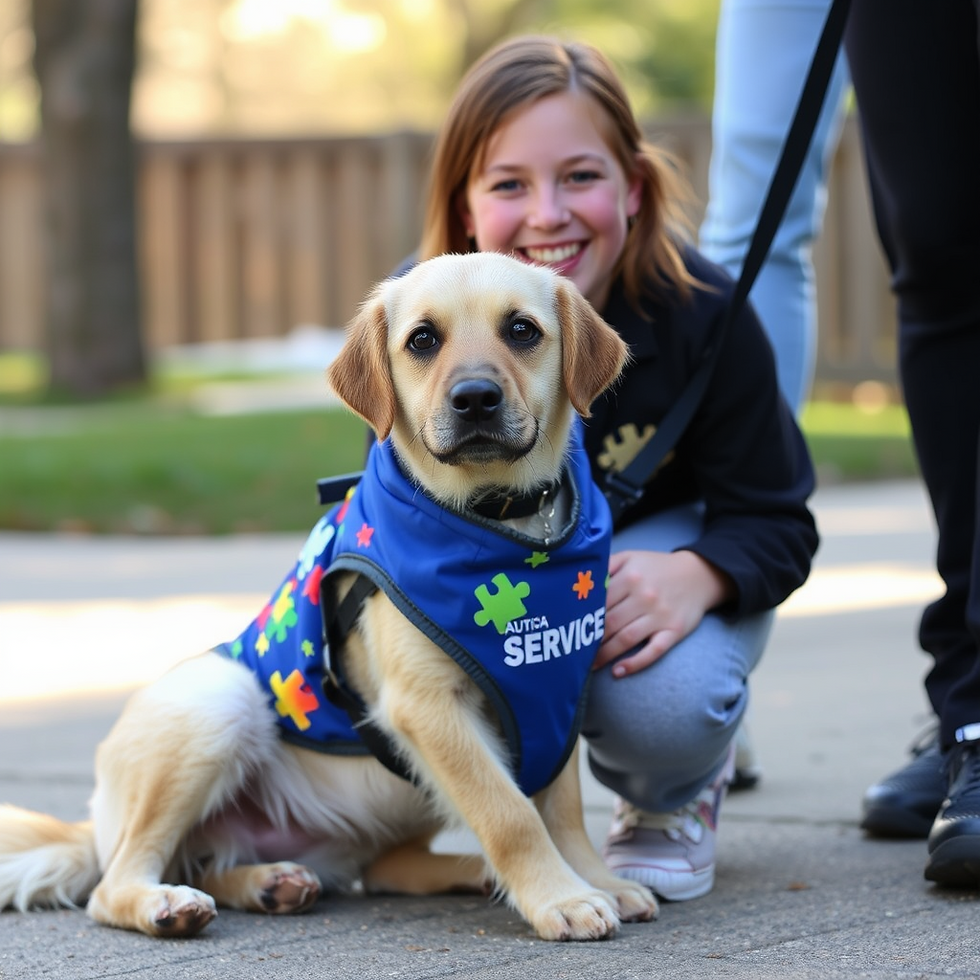
For many families of children and adults with Autism Spectrum Disorder (ASD), a service dog can be more than a companion - it can be a life-changing support tool. These specially trained dogs provide safety, structure, and emotional regulation support to help individuals with autism thrive in everyday life.
In this post, we’ll explore how service dogs can support individuals with autism, where to access one in Ontario, and what families need to consider before beginning the process.
What Is a Service Dog for Autism?
Autism service dogs are professionally trained to assist individuals with autism in various ways, including:
Preventing Elopement: A tethered dog can stop a child from running into dangerous situations (e.g., traffic, crowded areas).
Interrupting Repetitive Behaviours: The dog may nudge or gently redirect the individual during episodes of self-stimulation or distress.
Providing Deep Pressure Therapy: Lying across a child’s lap or chest to reduce anxiety or regulate the nervous system.
Increasing Social Interaction: Service dogs often act as social bridges, prompting conversation and reducing social anxiety.
Enhancing Safety and Independence: Older children and adults may benefit from a dog that helps them navigate the community more confidently.
Benefits of Service Dogs for Individuals with Autism
Improved Emotional Regulation
Service dogs can help reduce meltdowns, anxiety, and sensory overload by offering calming pressure or emotional grounding.
Increased Safety
For children prone to elopement, a service dog trained to “anchor” can physically prevent dangerous wandering.
Enhanced Communication and Social Skills
The presence of a service dog may increase verbal communication and provide opportunities to practice social interactions.
Emotional Comfort
The bond with a service dog often improves emotional well-being and fosters feelings of security and companionship.
Responsibilities of the Family or Handler
While service dogs provide many benefits, they also require ongoing care, structure, and involvement from the family or individual. Key responsibilities include:
Daily care: Feeding, grooming, toileting, and exercising the dog.
Reinforcement of training: Families must maintain commands and reinforce proper behaviour.
Public etiquette: Ensuring the dog behaves appropriately in public spaces.
Consistency: Following the service dog agency’s guidelines for handling, schedules, and bonding.
Many organizations require a handler (usually a parent or the individual with autism) to attend multi-day training sessions before taking the dog home.
Cost of a Service Dog for Autism
Service dogs typically cost between $25,000 to $35,000 to breed, train, and place. Most agencies fundraise or subsidize this cost, but families are often expected to contribute or assist with fundraising.
Tip: Passport Funding, charitable grants, and donations can help offset the cost.
Where to Get a Service Dog in Ontario
Here are some reputable service dog providers:
1. National Service Dogs (NSD) – Cambridge, ON
Specializes in service dogs for children with autism.
Families must complete an application and attend intensive training.
2. Lions Foundation of Canada Dog Guides – Oakville, ON
Offers autism assistance dogs free of charge through donations.
Open to children aged 3–12 diagnosed with ASD.
3. Autism Dog Services – Brantford, ON
Focuses on dogs for children with autism under the age of 10.
Highly individualized placement process.
4. MSAR Service Dogs – Manitoba-based, serves Ontario
Trains both service and companion dogs for a variety of needs including autism.
Known for custom training and unique breeds.
Things to Consider Before Applying
Is your child ready for a dog in the home and community?
Can your family commit to care, training, and structure?
Will a service dog align with your child’s sensory profile or behavioural needs?
Service dogs can be a tremendous asset - but only when placed in the right environment with the right support and expectations.
How The Nest Can Support You
At The Nest Family Behaviour Support Services, we help families prepare for a service dog by:
Assessing readiness and compatibility
Supporting you with the application process
Collaborating with agencies and service dog trainers
Developing behaviour plans that integrate the dog into your child’s daily routines
Final Thoughts
A service dog can offer safety, calm, and confidence to individuals with autism - but it’s a journey that takes commitment, patience, and teamwork. If your family is considering this life-changing support, start by learning more from one of the organizations listed above - and reach out to our team at The Nest to guide you every step of the way.


Comments